
Be the first to write a review
0%
(0)
0%
(0)
0%
(0)
0%
(0)
0%
(0)
Labor Day Sale: 30% off · Code LABOR30


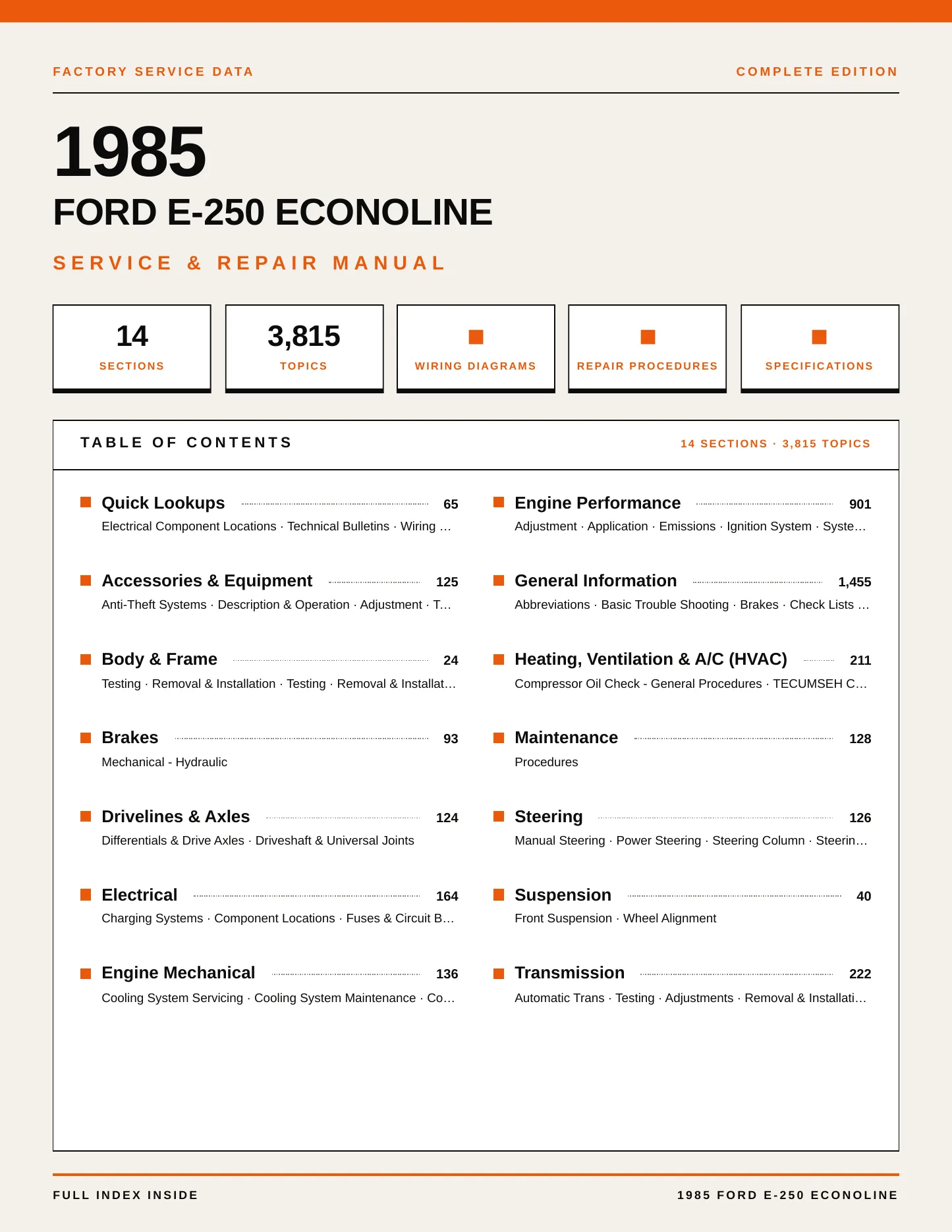
1985 Ford E-250 Econoline Service and Repair Manual

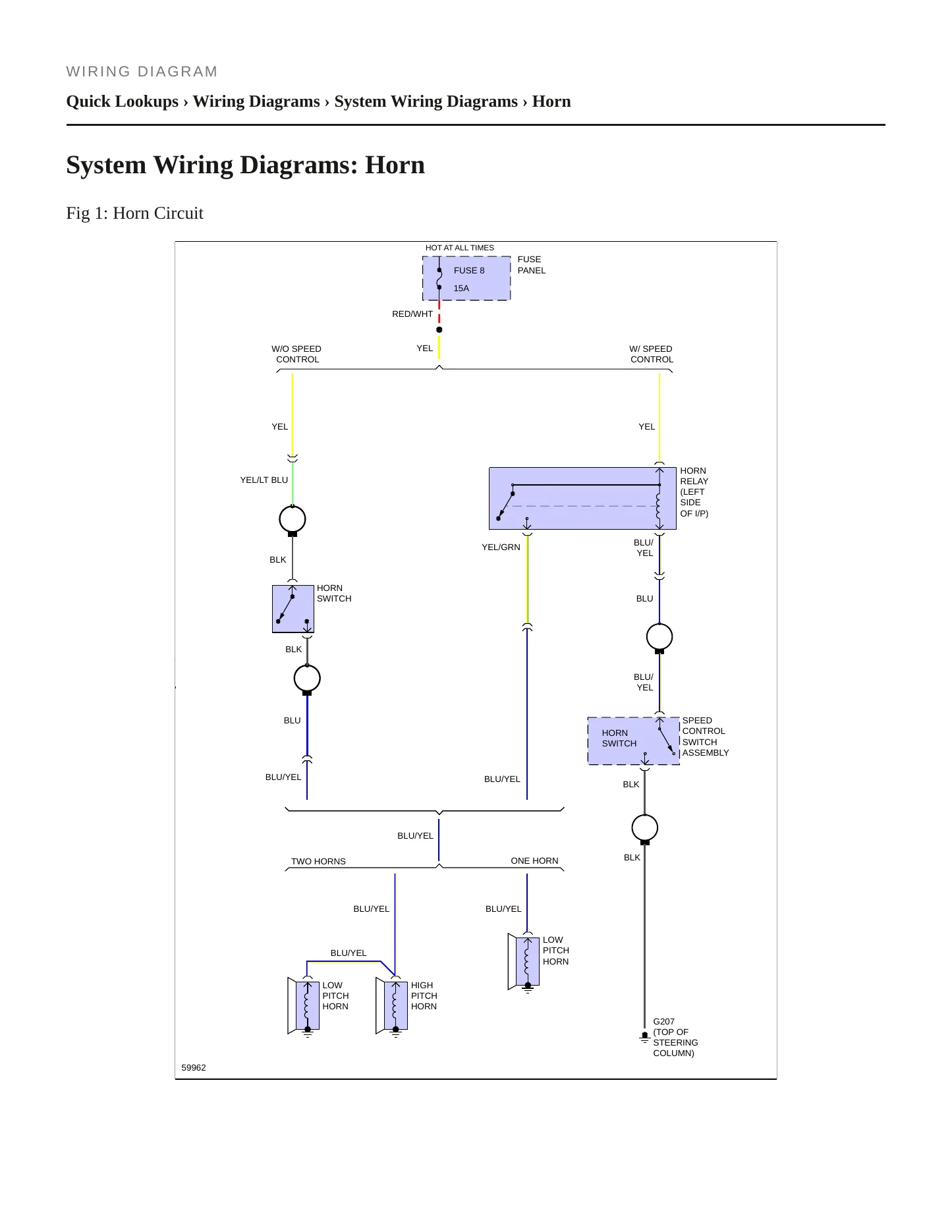
This factory service and repair manual for the 1985 Ford E-250 Econoline covers Base and XL trims, four bodies and three engines. The 5.8L and 5.0L OHV V8s run on gasoline, while the 4.9L OHV inline-six could be ordered to run on propane as well. Standard and extended passenger vans and standard and extended cargo vans are all documented. Engine, driveline, brake, steering, suspension and body work each get their own procedures, specifications, torque values, wiring diagrams and diagnostics, which is how one book manages a van sold in four shapes.
Engines covered
Body styles covered
Trims covered
Known issues on the 1985 E-250 Econoline. Five recalls are on federal record for the 1985 van. One concerns the rubber encasing the ball stud and socket joint between the steering drag link and the pitman arm, which can deteriorate and allow metal-to-metal contact. Another covers engine compartment heater and bypass hoses that may deteriorate and discharge coolant onto the exhaust manifold. A third addresses severe-duty underhood temperatures and fuel system pressures that can force fuel from the filler pipe. Four owner complaints are logged with NHTSA, split between the electrical and fuel systems. Steering linkage, cooling and fuel delivery procedures are all in this book.
CERTAIN FEDERAL-MOGUL AFTERMARKET FUEL PUMPS SOLD UNDER THE BRAND NAMES OF CARTER, ACCUFLOW, NAPA, TRUFLOW, PARTS DEPO, AND PARTS MASTER, SHIPPED BETWEEN AUGUST 2006 AND JULY 2007 FOR USE ON THE VEHIC
EXTREME OPERATING CONDITIONS COULD CAUSE PREMATURE DETERIORATION OF THE ENGINE COMPARTMENT HEATER HOSES OR ENGINE BYPASS HOSES.
RUBBER THAT ENCASES BALL STUD AND SOCKET JOINT (CONNECTS STEERING DRAG LINK AND PITMAN ARM) MAY DETERIORATE AND CAUSE METAL TO METAL CONTACT.
WHEN FRONTALLY IMPACTED INTO A FIXED BARRIER AT 30 MPH, AS SPECIFIED IN FEDERAL MOTOR VEHICLE SAFETY STANDARD (FMVSS) NO. 301, THE LEFT FRAME RAILS OF SUCH VEHICLES MAY DISPLACE INBOARD, PINCHING T
VEHICLES ARE SUBJECT TO EXCESSIVE UNDERHOOD TEMPERATURES AND FUEL SYSTEM PRESSURES IN SEVERE DUTY APPLICATIONS.
ELECTRONIC MODULE WOULD HEAT UP AND FAIL AT TIMES. THE VEHICLE WOULD BE DIFFICULT TO START AT TIMES ALSO DUE TO ELECTRONIC MODULE.
FUEL TANK CHANGE OVER SWITCH FAILED.
Showing the 2 most serious of 4 complaints filed with NHTSA.