
Be the first to write a review
0%
(0)
0%
(0)
0%
(0)
0%
(0)
0%
(0)
Labor Day Sale: 30% off · Code LABOR30


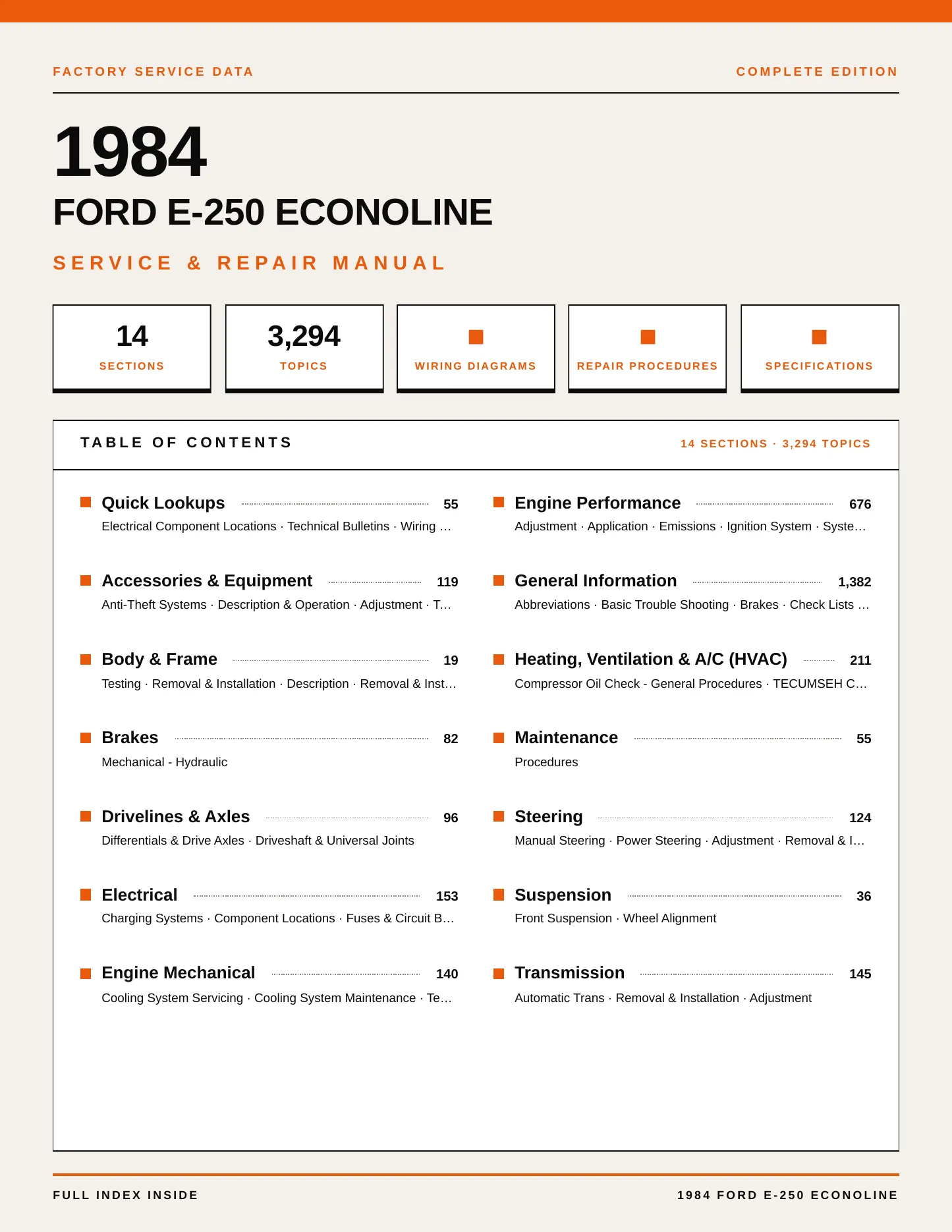
1984 Ford E-250 Econoline Service and Repair Manual

This factory service and repair manual for the 1984 Ford E-250 Econoline lists three engines: the 5.8L OHV V8, the 5.0L OHV V8 and the 4.9L OHV inline-six, which was offered on propane as well as gasoline. Base and XL trims are documented, along with four bodies, the standard passenger van and standard cargo van and their extended counterparts. One book has to serve all of them, which is why the procedures, specifications, torque values, wiring diagrams and diagnostics are arranged by system rather than by body or trim.
Engines covered
Body styles covered
Trims covered
Known issues on the 1984 E-250 Econoline. Fuel delivery, cooling and wheels account for most of the six recalls carried by this year. One concerns engine compartment heater and bypass hoses that could deteriorate under extreme operating conditions and spill coolant onto the exhaust manifold. Another covers a carburetor secondary throttle shaft that can become contaminated and stick partly open while driving. A third involves wheels whose welds may crack from fatigue. Two owner complaints are logged with NHTSA, one on tires and one on the suspension. Cooling system service, fuel system adjustment and wheel and suspension torque values all sit inside this manual's procedures and diagnostics.
CERTAIN FEDERAL-MOGUL AFTERMARKET FUEL PUMPS SOLD UNDER THE BRAND NAMES OF CARTER, ACCUFLOW, NAPA, TRUFLOW, PARTS DEPO, AND PARTS MASTER, SHIPPED BETWEEN AUGUST 2006 AND JULY 2007 FOR USE ON THE VEHIC
EXTREME OPERATING CONDITIONS COULD CAUSE PREMATURE DETERIORATION OF THE ENGINE COMPARTMENT HEATER HOSES OR ENGINE BYPASS HOSES.
THE SECONDARY THROTTLE SHAFT MAY, WITH ACCUMULATED MILEAGE, BECOME CONTAMINATED AND MAY STICK IN A PARTIALLY OPEN POSITION WHILE DRIVING.
WHEN FRONTALLY IMPACTED INTO A FIXED BARRIER AT 30 MPH, AS SPECIFIED IN FEDERAL MOTOR VEHICLE SAFETY STANDARD (FMVSS) NO. 301, THE LEFT FRAME RAILS OF SUCH VEHICLES MAY DISPLACE INBOARD, PINCHING T
VEHICLES ARE SUBJECT TO EXCESSIVE UNDERHOOD TEMPERATURES AND FUEL SYSTEM PRESSURES IN SEVERE DUTY APPLICATIONS.
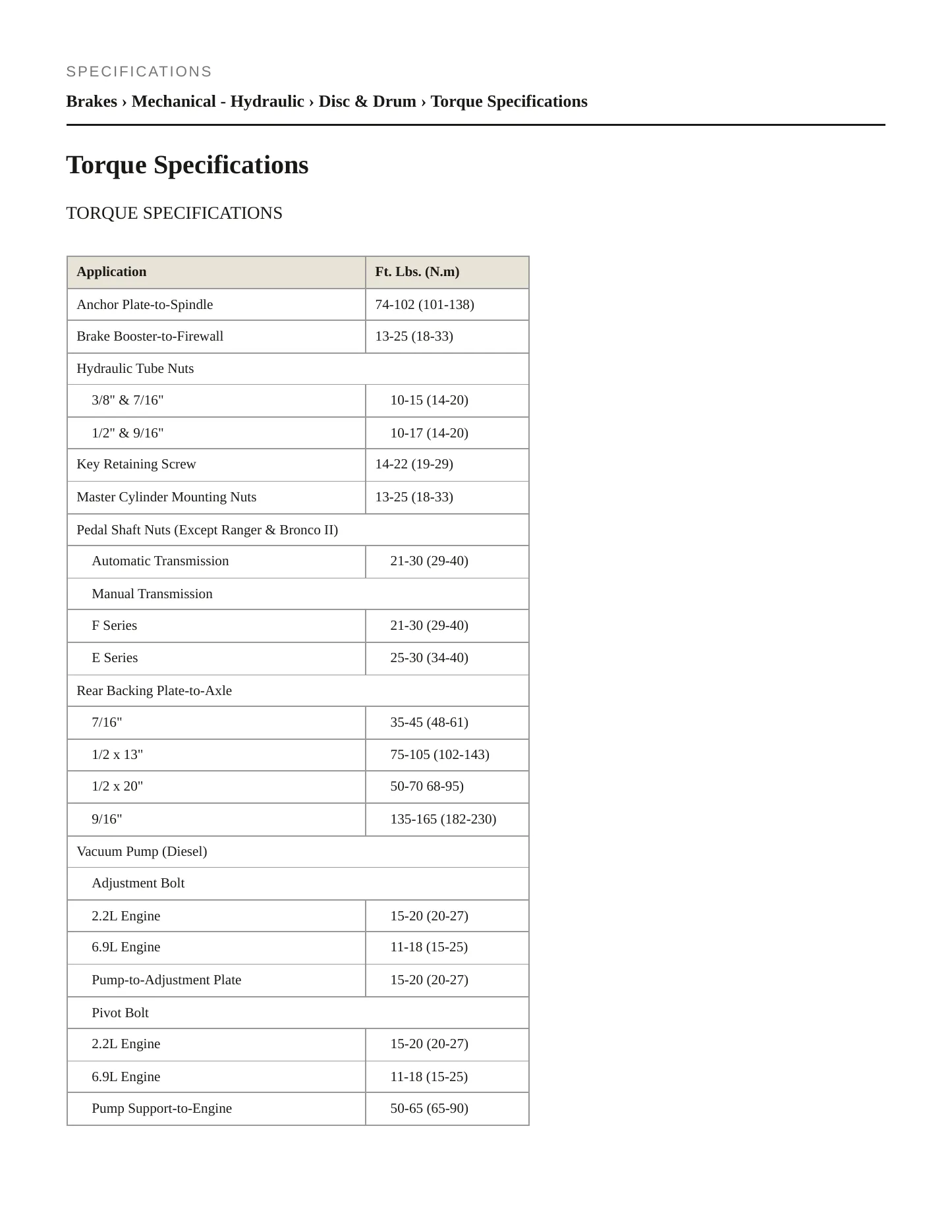
SOME VEHICLES MAY HAVE BEEN BUILT WITH IMPROPERLY MANUFACTURED WHEELS. THE WELDS SECURING THE CENTER SECTIONS TO THE RIMS MAY CRACK FROM FATIGUE.
FIRESTONE STEELTEX RADIAL R4S TIRE BLEW OUT AT 50 MPH WHILE DRIVING IN A NARROW, NO-STOP HIGHWAY CONSTRUCTION ZONE. FLYING TIRE TREAD DESTROYED VAN'S REAR QUARTER PANEL AND SOME PAINT. *NM
SPRINGS ARE INADEQUATE FOR THE WEIGHT OF THE TRAILER.