
Be the first to write a review
0%
(0)
0%
(0)
0%
(0)
0%
(0)
0%
(0)
Labor Day Sale: 30% off · Code LABOR30


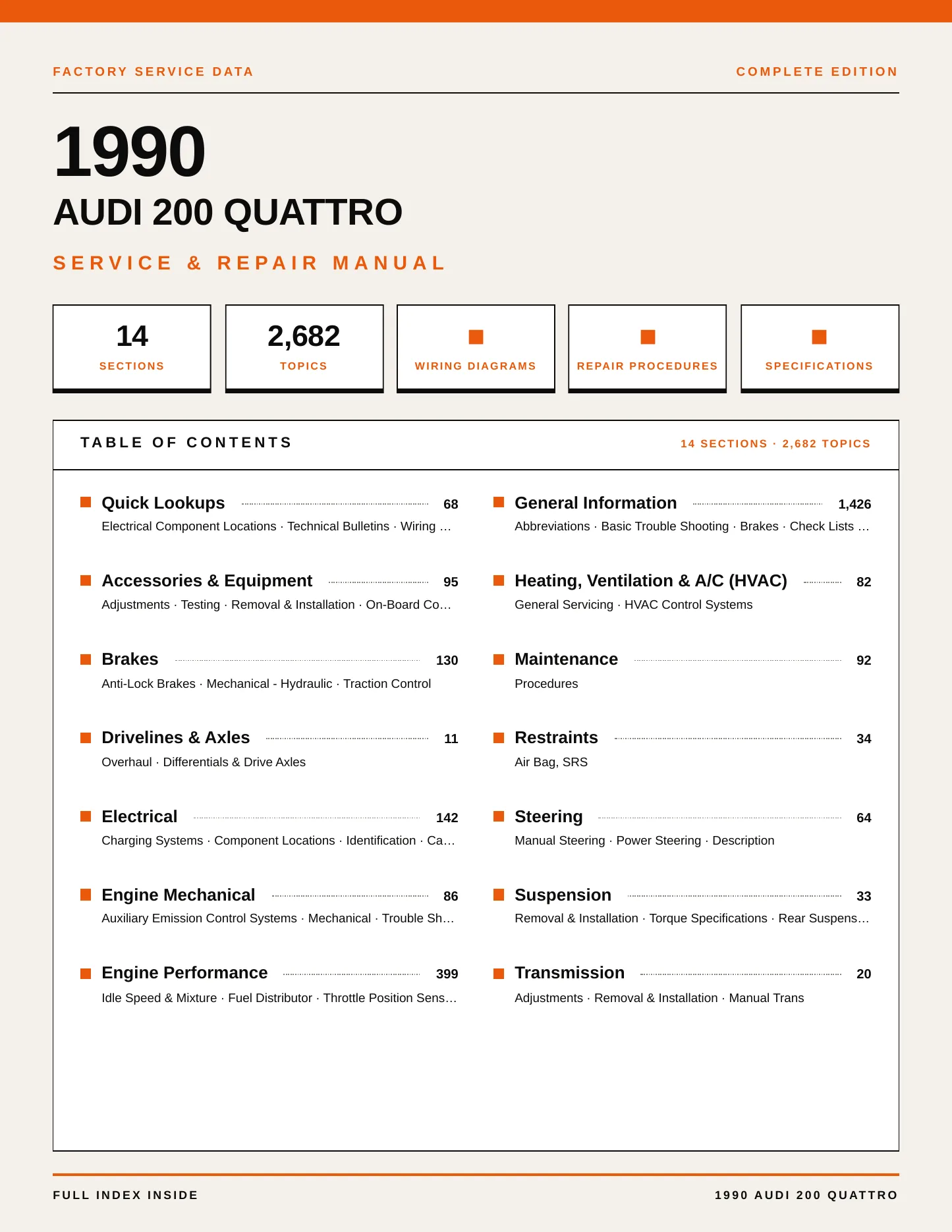
1990 Audi 200 Quattro Service and Repair Manual

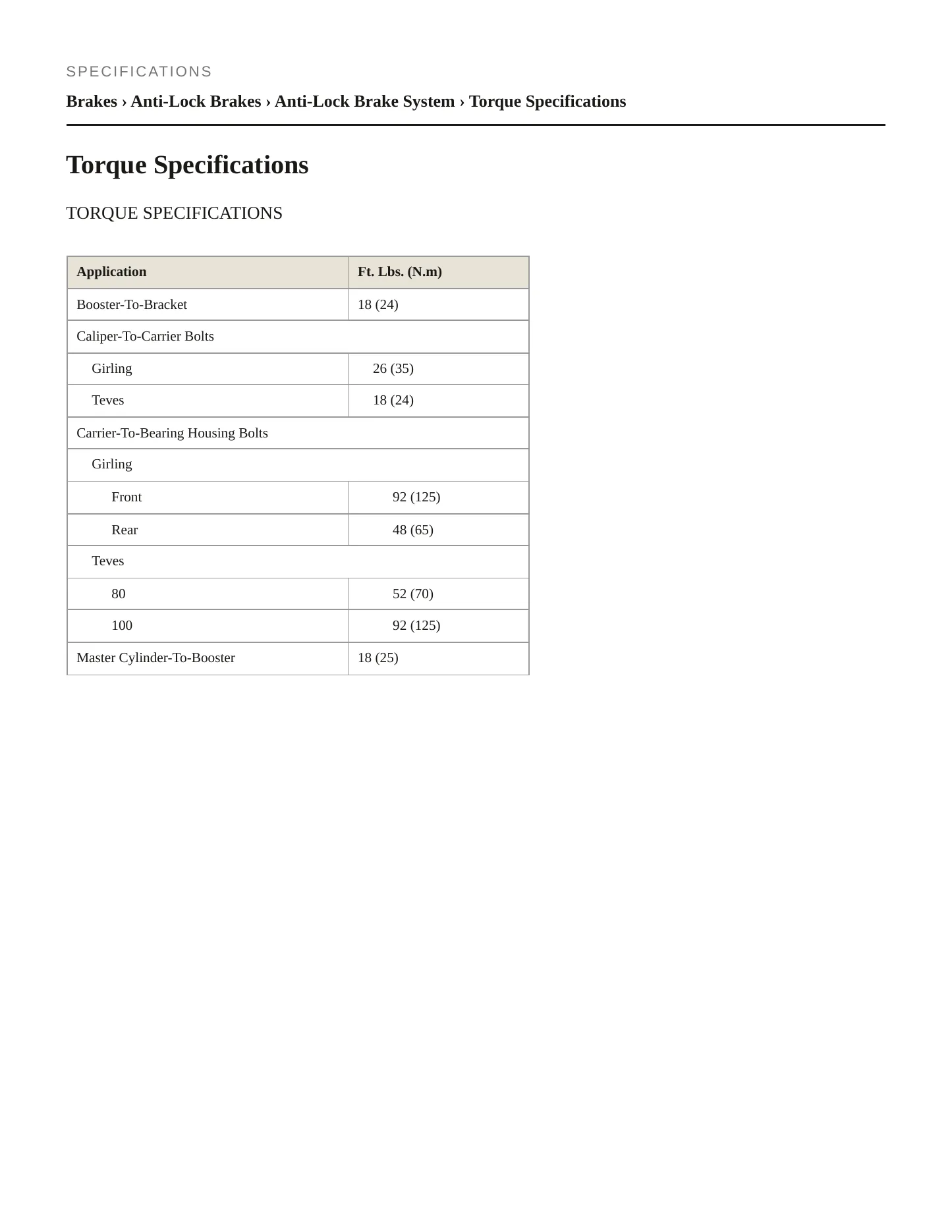
This 1990 Audi 200 Quattro factory service and repair manual is built around this exact year, engine and trim, so the torque values and diagnostic steps you follow are the ones Audi published for the 2.2L turbocharged five-cylinder (engine code MC) under your hood, not a generic figure pulled from a different model year.
Engines covered
Body styles covered
Trims covered
Known issues on the 1990 200 Quattro. Four recalls are on federal record for this model year. The first covers the axle assembly: differential oil is lost over time to evaporation, and the resulting low oil level causes premature bearing and gear wear that can lead to the front wheels locking, rapid deceleration, and loss of vehicle control. The second covers the vehicle capacity weight, which was inadvertently omitted from the placard inside the gas filler door, failing to meet FMVSS 110 labeling requirements. The third covers an incorrect jack instruction label in the trunk, which can lead to improper jack use and the jack collapsing on someone working under or near the vehicle. The fourth covers the frontal air bag sensor and control module, which can fail to meet Audi's durability standards over the lifetime of the vehicle and inadvertently deploy the air bag without warning. Owners have filed 5 complaints for the year and no technical service bulletins are logged. The factory diagnostic and repair procedures behind each of those systems are here.
From a differential oil check to inspecting the air bag sensor wiring, it keeps you on the OEM procedure and the correct specification for your specific 1990 200 Quattro.
THE DIFFERENTIAL OIL OF THE TRANSAXLE IS LOST OVER TIME DUE TO EVAPORATION. LOW OIL LEVELS CAUSE PREMATURE BEARING AND GEAR WEAR AND EVENTUAL FAILURE OF THE DIFFERENTIAL.
IN THE EVENT OF FAILURE, THE VEHICLE'S DRIVE WHEELS COULDLOSE POWER. IN EXTREME CIRCUMSTANCES, THE FRONT WHEELS LOCK, CAUSING RAPIDDECELERATION RESULTING IN POSSIBLE LOSS OF VEHICLE CONTROL AND AN ACC
DRAIN AND REPLACE THE DIFFERENTIAL GEAR OIL WITH OIL HAVING HIGHER PERFORMANCE CHARACTERISTICS.
THE VEHICLE CAPACITY WEIGHT WAS INADVERTENTLY OMITTED FROM PLACARD LOCATED INSIDE THE GAS FILLER DOOR, AS REQUIRED BY FMVSS 11O.
VEHICLES FAIL TO MEET THE REQUIREMENTS OF FMVSS 110.
NEW LABELS CONTAINING THE VEHICLE CAPACITY WEIGHT WILL BE AFFIXED TO THE VEHICLES.
INSTRUCTION LABEL IN THE TRUNK OF VEHICLE IS INCORRECT FOR THE JACK SUPPLIED WITH THE VEHICLE.
INCORRECT USE CAN RESULT IN THE JACK COLLAPSING, WITHINJURY TO INDIVIDUALS UNDER OR NEAR VEHICLE DURING COLLAPSE.
SUPPLY INSERT TO OWNER'S MANUAL NOTING CORRECT USAGE, AS WELL AS A CORRECTED INSTRUCTION LABEL FOR THE TRUNK.
VEHICLE DESCRIPTION: PASSENGER VEHICLES. SOME AIR BAG SENSORS DO NOT COMPLY WITH AUDI'S DURABILITY STANDARDS OVER THE LIFETIME OF THE VEHICLE.
IN THE EVENT THE SENSOR SHOULD MALFUNCTION, THE AIR BAG RESTRAINT SYSTEM CAN INADVERTENTLY DEPLOY. DEPLOYMENT OF THE AIR BAG RESTRAINT SYSTEM WITHOUT WARNING COULD CAUSE A DRIVER TO LOSE VEHICLE CONT
DEALERS WILL REPLACE THE AIR BAG SENSOR CONTROL MODULE.
WHILE DRIVING WITH CRUISE CONTROL ON, CONSUMER WENT TO DISENGAGE THE CRUISE CONTROL AND PRESSED THE ACCELERATOR, VEHICLE SUDDENLY ACCELERATED TO FULL THROTTLE. TO STOP, VEHICLE HAD TO BE SHUT OFF
CRUISE CONTROL SET AT 55 MPH, CAR RPMS INCREASED OUT OF CONTROL, CAR HAD TO BE PLACED IN NEUTRAL AND STEERED TO SIDE OF ROAD. CAR WAS THEN UNDRIVABLE, BECAUSE OF EXCESSIVE RPM PROBLEM.
TRANSMISSION FAILED. *SD
WATER PUMP FAILED. *SD
FLYWHEEL FAILED. *SD