

Lexus built its compact sport sedan to chase BMW, and on the things that matter most, it largely succeeded. Two decades of federal records show where the IS is genuinely bulletproof, and the small handful of places it isn't.
For more than twenty years, the Lexus IS has played a very particular role: the rear-drive sport sedan for the buyer who wanted a 3 Series experience without a 3 Series maintenance bill. It is quieter than its German rivals, slower to depreciate, and far less likely to leave you stranded. That reputation is mostly earned. But "mostly" is the operative word, and the gap between the marketing and the messier reality is exactly where a used-car shopper either saves money or walks into an avoidable repair.
To separate the folklore from the facts, it helps to go to the source automakers can't spin. The U.S. National Highway Traffic Safety Administration keeps public records on every IS sold here, and across model years 2001 through 2022 the numbers tell a clear story about what actually goes wrong, and how often.
The car Lexus built to be taken seriously
The IS arrived because Lexus had a credibility problem with enthusiasts. The brand could build a flawless luxury cruiser, but it had nothing for the person who actually enjoyed driving. The IS was the answer: a compact, balanced, rear-wheel-drive sedan with a low-slung seating position and a chassis tuned to be tossed into a corner rather than wafted through one.
What separated it from the segment benchmarks wasn't outright pace. It was the trade Lexus offered. You gave up a little of the BMW's steering feel and got, in return, a powertrain bloodline that routinely runs past 200,000 miles, an interior that doesn't rattle itself apart, and dealer service that treats you like a guest. For a huge number of buyers, that was the smarter sport sedan. The IS has never been the car you brag about on a track forum; it's the one still running, quietly, long after its rivals have moved on to their third owner and their fourth check-engine light.
Generations and engines worth knowing
There are effectively three distinct cars wearing the IS badge, and they could hardly be more different under the hood.
The first generation (2001–2005 IS300) is the enthusiast's cult pick. Its 3.0-liter 2JZ-GE inline-six shares its family tree with the legendary Supra engine, it was offered with a proper five-speed manual, and it is about as mechanically honest as a modern Lexus gets. These are old now, but the drivetrain is close to indestructible.
The second generation (2006–2013) is where the lineup split. The IS250 used a 2.5-liter direct-injection V6; the IS350 ran a 3.5-liter 2GR-FSE V6 with Toyota's D-4S system, which pairs direct injection with traditional port injection. That detail matters enormously for ownership, as we'll see. This era also gave us the wild IS-F, with a 416-horsepower 5.0-liter V8, and the IS C retractable hardtop.
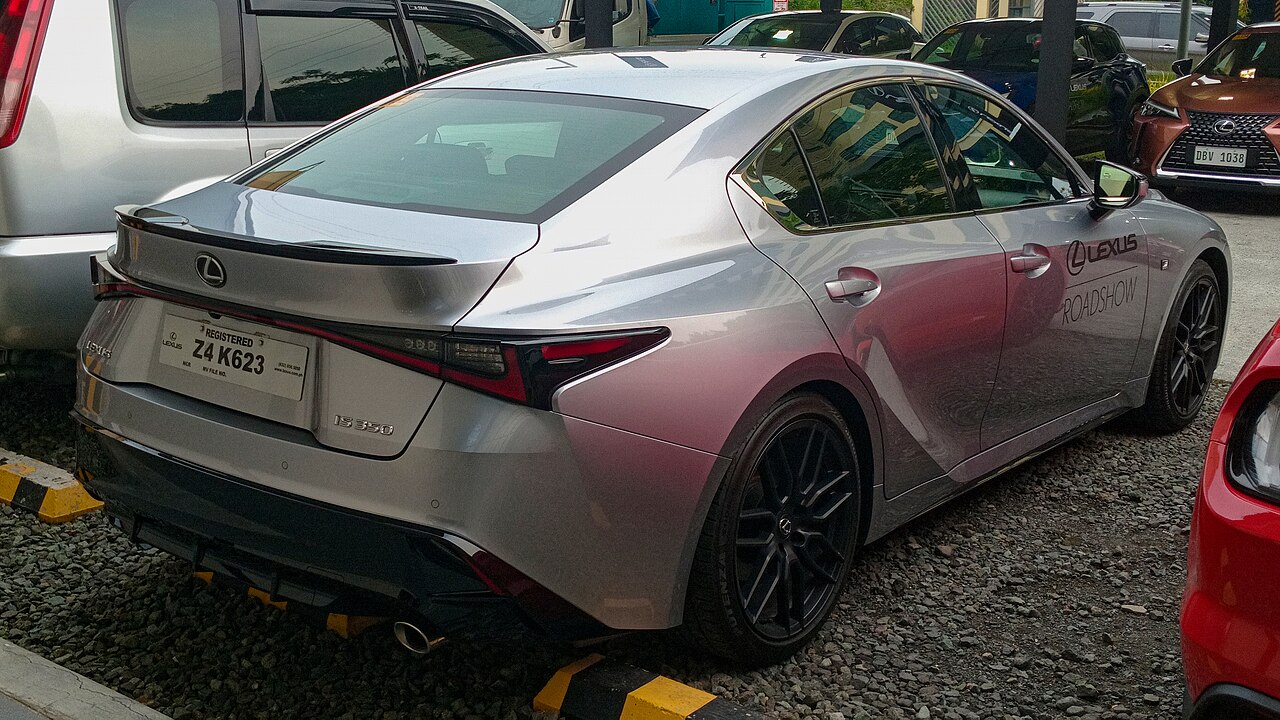
The third generation (2014 onward) brought sharper styling, the spindle grille, turbocharged four-cylinder and V6 options badged IS200t, IS300 and IS350, and eventually the V8-powered IS500. This is the most refined and, by the federal record, the least troublesome IS of the three.
The problems every owner should know
A reliable car is not a perfect car, and the IS has a few specific, well-documented weak points. Knowing them turns a gamble into an informed purchase.
The IS250's carbon buildup. This is the big one, and it's a design consequence, not a fluke. The second-generation IS250's 2.5-liter V6 uses direct injection only, which sprays fuel straight into the cylinder and never washes the back of the intake valves. Over tens of thousands of miles, carbon deposits accumulate there, causing rough idle, misfires and lost power. The issue was widespread enough that Lexus issued a Customer Support Program to address it, and the standard fix, walnut-blasting the valves, commonly runs several hundred to over a thousand dollars once a car is out of coverage. Crucially, the IS350's D-4S engine, with its added port injectors, largely sidesteps this problem. If you're choosing between the two second-gen engines, that is the single most important fact in this article.
The melting, sticky dashboard. Owners of 2006–2008 cars (and some later ones) reported dashboards turning glossy, soft and tacky in the sun, sometimes cracking. It became a class-action matter, and Toyota responded with a warranty-enhancement program to replace affected dashboards. Many cars have already been fixed, but on an unrepaired example it's a real cost and an easy thing to check with a fingertip during a test drive.
Air bags dominate the recall list. Of the 116 recall records on the IS, 69, by far the largest share, fall under air bags. This is mostly the industry-wide Takata inflator crisis (recall 16V340000), which affected dozens of automakers, not a Lexus-specific defect. It is, however, a genuine safety item: a degraded inflator can rupture and throw metal fragments. On any used IS, confirming the airbag remediation was completed is non-negotiable, and it's free.
Fuel pump and engine recalls. Ten recall records sit under the gasoline fuel system, including the Denso low-pressure fuel-pump recall (20V012000) that can let the engine stall while driving on certain 2019 cars. Eleven more records span the engine and cooling categories, among them a recall for valve springs that could fracture and cause a sudden stall (10V309000). Both are exactly the kind of item to verify as completed before you buy.
The smaller stuff. The data also logs 24 visibility and wiper records, among them a windshield-wiper recall (13V030000). Scattered elsewhere are odds and ends like an early accelerator-pedal recall from the 2006 car (05V565000) and a fix for VVT gear-housing bolts (13V395000). None of these define the IS, but a quick search of a specific VIN against open recalls is worth five minutes of anyone's time.
Buy the engine that drinks through two sets of injectors, sort out the dashboard, and most of the IS's headaches simply never arrive.
Which IS should you actually buy?
For most buyers, the third generation (2014 and newer) is the sweet spot, and the post-2017 refresh especially. The V6 cars are smooth and durable, the carbon-buildup worry is gone, and the federal record for these years is mercifully thin. It's the IS that asks the least of you.
Shopping the second generation? Favor the IS350 over the IS250. The IS350's dual-injection engine avoids the carbon headache that can cost real money on the 250, and the power deficit between them is significant anyway. If you do fall for a tidy IS250, factor a future intake cleaning into your offer and confirm whether the Customer Support Program work was ever done.
Enthusiasts have two tempting outliers: the first-gen IS300, for its 2JZ bloodline and available manual, and the IS-F, for its naturally aspirated V8. Both are wonderful and both demand a careful pre-purchase inspection given their age and, in the F's case, the cost of consumables.
Whatever the year, the buying checklist is short and the same: confirm the Takata airbag, fuel-pump and any engine recalls are closed; press on the dashboard; and on an IS250, listen at idle and budget for the valves. Do that, and you're buying into the reliability the IS is genuinely famous for, with eyes open about the rest.
Service it to the same standard Lexus built it
A factory service manual for your exact model year gives you the OEM procedures, torque figures and wiring diagrams to do an intake cleaning, a fuel-pump replacement or a dashboard swap correctly the first time, instead of guessing.
Find your Lexus IS manual →