

It looked like a toaster, drove like a Toyota, and outlasted nearly everything it was parked next to. Two decades later the Scion xB is a genuine cult classic, but one engine and one recall separate a great buy from a headache.
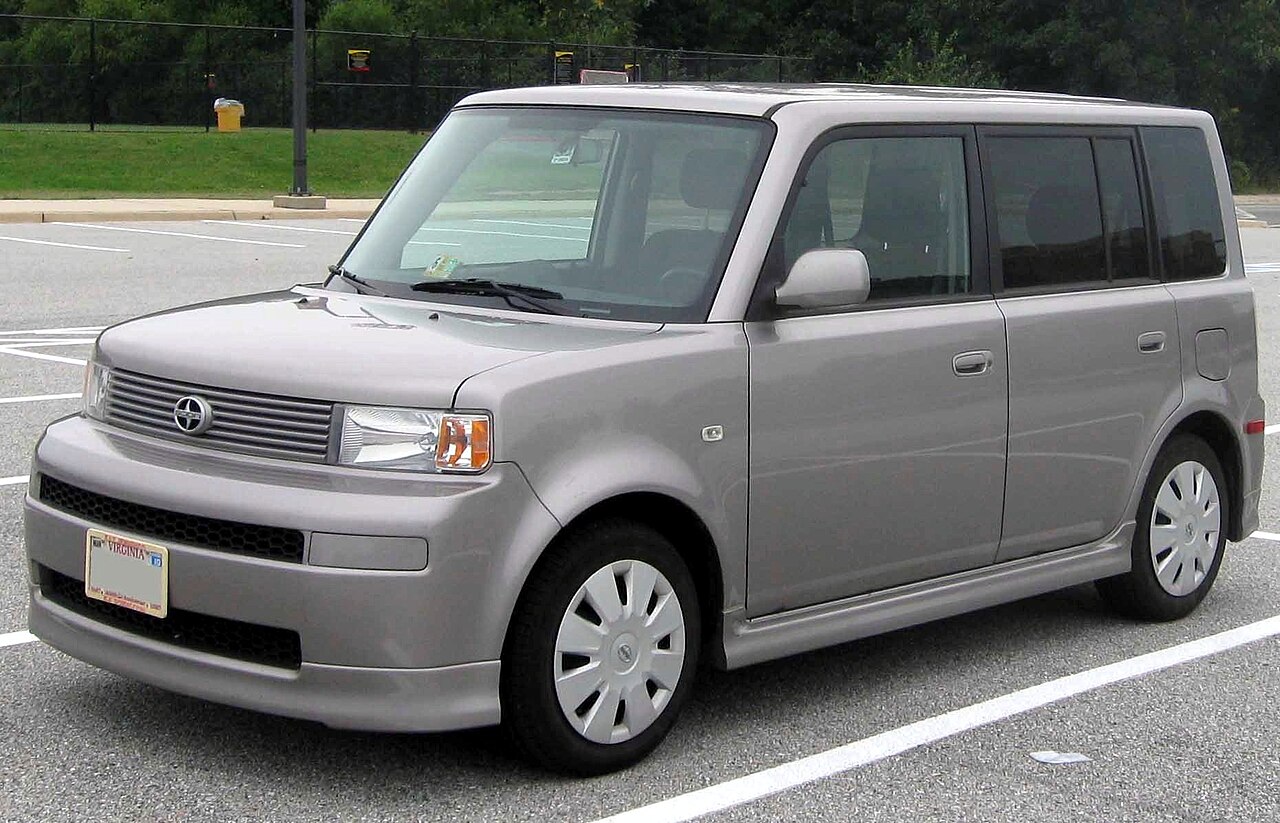
When Toyota's youth brand rolled the xB into U.S. showrooms for 2004, the car press didn't quite know what to do with it. Here was a $14,000 box on wheels, upright and unapologetic, with a glasshouse so tall you could wear a hat inside it. It was never fast and never tried to be pretty. What it offered instead was something rarer: a small car that treated its driver and four passengers like adults, with cargo space and outward visibility that shamed vehicles twice its price. Buyers got the joke immediately, and the xB became the unlikely face of a movement.
What it also inherited, quietly, was a Toyota mechanical foundation, and the long federal paper trail that comes with any vehicle sold in real numbers. Across its U.S. life the xB accumulated a record worth reading before you sign anything. The figures below come straight from the National Highway Traffic Safety Administration's database, and they tell you exactly where to look.
Why people fall for the box
The xB's appeal has always been about honesty over image. The shape is pure function: a near-vertical windshield, a flat floor, seats mounted high enough to slide into rather than fall down into, and a tailgate that opens onto a cube of usable space. It is one of the easiest cars on the road to see out of, park, and load, and that usability has aged far better than any styling trend. Owners hang onto these things for fifteen and twenty years not because they're collectible in a Barrett-Jackson sense, but because nothing else does the same job as cheerfully.
Underneath the novelty sits ordinary Toyota economy-car engineering, which is precisely why the xB earned its reputation for going the distance. High-mileage examples are common, and a well-maintained car cresting 200,000 miles is closer to the rule than the exception. The trade-off, especially in first-generation form, is performance: this is a vehicle you drive with momentum, not muscle. Accept that, and it rarely lets you down.
Two generations, two very different cars
Treat the xB as two separate vehicles, because mechanically that's what they are.
The first generation (2004–2006) rode on Toyota's Echo-derived platform and used the 1.5-liter 1NZ-FE four-cylinder, rated at 108 horsepower and 105 lb-ft of torque, with a five-speed manual or a four-speed automatic. The 1NZ-FE is one of the more durable small Toyota engines of its era, timing-chain driven and famously tolerant of neglect. It is slow, particularly with the automatic and a full load, but it is the closest thing to a worry-free powertrain the xB ever offered.
After a one-year U.S. hiatus, the larger second generation (2008–2015) arrived with the 2.4-liter 2AZ-FE four, jumping to 158 horsepower and 162 lb-ft. The car grew, gained weight and freeway composure, and finally felt comfortable merging without a running start. That extra muscle came from a much-used Toyota engine family, and as we'll get to, that family's best-known weakness rode along with it.
The problems every owner should know
The xB is reliable, not flawless, and being honest about the exceptions is what makes it a smart used buy rather than a gamble.
Oil consumption on early second-generation cars. This is the big one. The 2.4-liter 2AZ-FE used in roughly 2008–2011 xB models (and some 2012s) suffered from an oil-ring and piston design that let many engines burn oil at an alarming rate, sometimes a quart every thousand miles or worse. The fault was widespread across the 2AZ-FE family, not unique to the xB, and Toyota addressed it with a Warranty Enhancement program that extended coverage and authorized a redesigned piston-and-ring repair. The catch: that enhanced coverage was time- and mileage-limited and has now lapsed on these cars. On any 2008–2012 example, check oil level personally and ask for documentation that the piston/ring fix was performed; if it wasn't, budget for vigilant top-ups or an eventual engine refresh.
Airbags are the dominant recall category, by design. Of the xB's 55 NHTSA recall campaigns, the largest single cluster is AIR BAGS (16 campaigns), and much of that is the Takata story. Second-generation cars were swept into the global recall over ammonium-nitrate front passenger inflators that can degrade with age and heat and rupture, firing metal fragments into the cabin. NHTSA campaign 19V741000 is part of that effort. The remedy is free and the parts have long been available, so the only unforgivable mistake here is buying a car whose Takata work is still open. Run the VIN before you hand over money.
Power-window switch overheating. Filed under the VISIBILITY system in the federal record, campaign 12V491000 covers a driver's-door power-window master switch that could overheat and, in a worst case, melt and cause a fire. It's a known Toyota-wide issue of the period and a quick dealer fix; confirm it was completed.
Read the 55 figure with context. That campaign count looks startling until you see what's in it. A meaningful share falls under EQUIPMENT (15) and EXTERIOR LIGHTING (9) and traces to aftermarket accessories and component suppliers rather than the car itself — odd entries like incorrect load-capacity labels (campaign 09V223000) and missing amber reflectors on add-on headlights (06E023000). Others sit under VEHICLE SPEED CONTROL, including an aftermarket cruise-control kit (07E005000). They're real, but they aren't the same class of concern as a defective inflator. The safety-critical attention belongs on airbags and that early-2.4 oil habit.
Age-related odds and ends. First-generation dashboards are prone to cracking under sustained sun, and the rear hatch handle assembly is a common failure point on mid-decade cars. Neither is a dealbreaker; both are cheap to live with and worth using as negotiating leverage.
The xB never tried to be cool. Twenty years on, that quiet competence is exactly why it still is.
Which xB should you actually buy?
For maximum peace of mind, a clean first-generation 2004–2006 car is the connoisseur's pick. The 1.5-liter 1NZ-FE has no oil-consumption skeleton in its closet, parts are cheap, and the simplicity is the point. You give up power and a little highway calm, but you get the most trouble-free version of the formula. Just inspect the dash and the suspension bushings, which have had two decades to age.
If you want the extra grunt and refinement of the second generation, aim for a 2013–2015 car, built after the worst of the oil-ring problem was sorted, and confirm the Takata recall is closed. A 2008–2012 can still be a fine buy and they're often cheap, but only with eyes open: verify the oil-consumption repair history, check the level yourself on the test drive, and price in the risk if there's no paperwork. The single year owners flag most often as a gamble is the debut 2008.
Across the board, the xB rewards the buyer who does ten minutes of homework. Pull the VIN's recall status, look under the oil cap, and ask for service records. Do that, and you're left with what made the box a cult car in the first place: an honest, durable Toyota in the most usable shape the company ever built.
Service it like the factory intended
Oil-consumption checks, inflator replacement, window-switch repair, and timing service all go smoother with the correct OEM procedures, torque figures, and wiring diagrams for your exact year. A factory service manual gives you the same reference the dealer technician works from.
Find your Scion xB manual →