
Be the first to write a review
0%
(0)
0%
(0)
0%
(0)
0%
(0)
0%
(0)
Labor Day Sale: 30% off · Code LABOR30


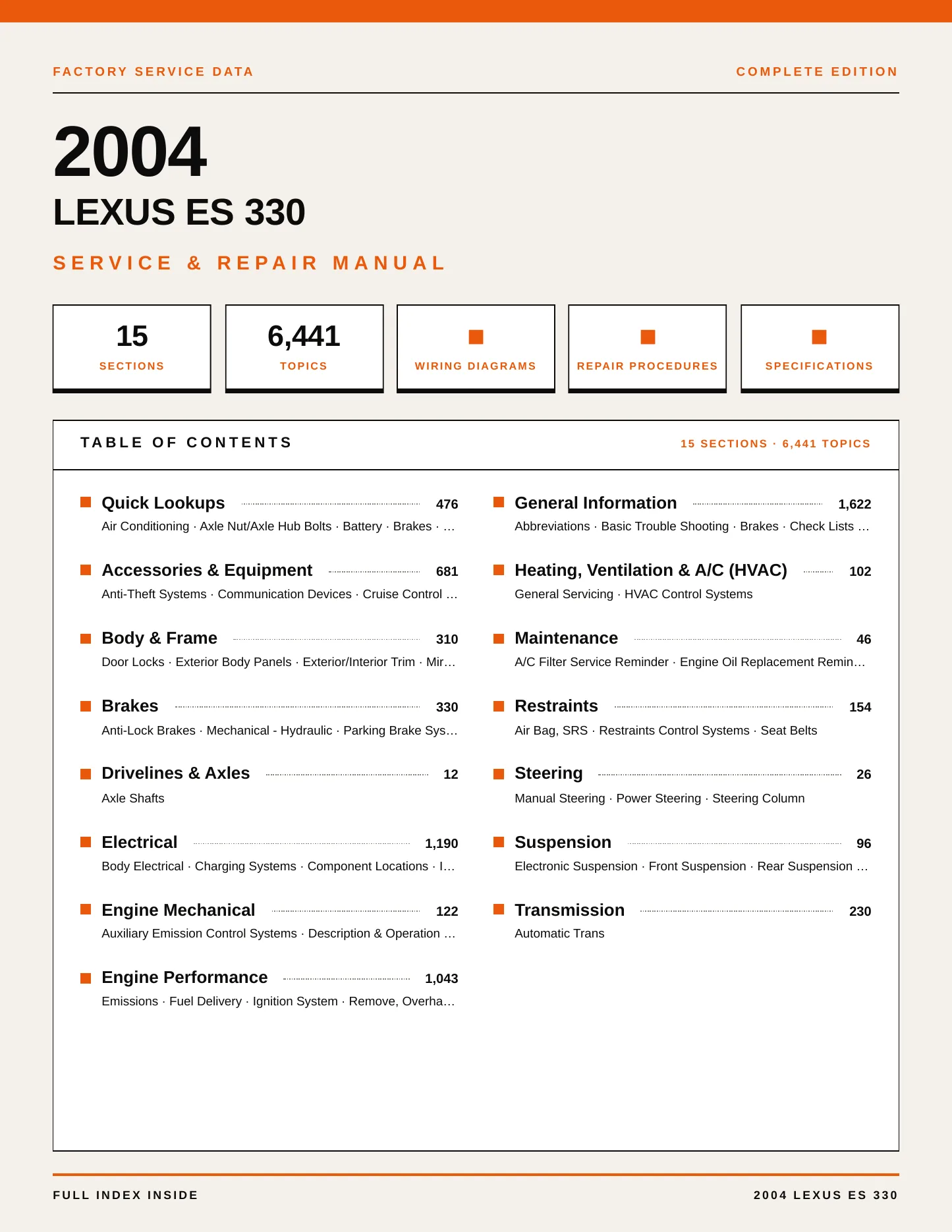
2004 Lexus ES 330 Service and Repair Manual

This service and repair manual is tied to the 2004 Lexus ES 330 in particular — one model year, one engine, the 3.3L V6 (3MZ-FE) — so the figures and procedures you work from are the ones Lexus published for this car rather than values approximated from an adjacent model year.
Engines
Trims
Known issues on the 2004 ES 330. One recall is on federal record for this model year, and it covers the front seat belt buckle assembly. It applies to certain passenger vehicles equipped with a front passenger power seat, where certain rear-facing infant child seat bases are installed onto the seat with an excessively high seat belt tension. The recall adds that if the switch becomes unseated, the front passenger occupant classification system may be mistaken. Owners have filed 190 complaints for the year and Lexus has issued 43 technical service bulletins. The diagnostic and repair procedures behind those systems are here.
From the front passenger occupant classification system to a scheduled service on the 3MZ-FE, it keeps you on the OEM procedure and the correct specification for this 2004 ES 330.
TOYOTA IS RECALLING CERTAIN MODEL YEAR 2004 AVALON VEHICLES; 2004 AND 2005 CAMRY, CAMRY SOLARA, HIGHLANDER, AND SIENNA VEHICLES, 2006 HIGHLANDER HYBRID; 2004 AND 2005 LEXUS ES330 AND RX330; AND 2006 LEXUS RX400H VEHICLES MANUFACTURED FROM JUNE 1, 2004 THROUGH MARCH 31, 2005, EQUIPPED WITH THE 1MZ-FE OR 3MZ-FE ENGINE. THE AMOUNT OF ADHESIVE AGENT APPLIED BETWEEN THE OUTER RING AND THE TORSIONAL RUBBER DAMPER (INNER RING) IN THE CRANKSHAFT PULLEY MAY BE INADEQUATE. IF THE ADHESIVE IS INSUFFICIENT, THERE IS A POSSIBILITY THAT THE OUTER RING MAY BECOME MISALIGNED AND IT MAY NOT PROPERLY ROTATE WITH THE INNER RING, CAUSING NOISE AND/OR ILLUMINATION OF THE BATTERY DISCHARGE INDICATOR LIGHT.
IN SOME CASES, THE BELT FOR THE POWER STEERING PUMP MAY BECOME DETACHED FROM THE PULLEY WHICH COULD RESULT IN A LOSS OF POWER STEERING AND A SUDDEN INCREASE IN STEERING EFFORT, INCREASING THE RISK OF A CRASH.
TOYOTA WILL NOTIFY OWNERS, AND DEALERS WILL CHECK THE CRANKSHAFT PULLEY TO IDENTIFY WHETHER IT WAS PRODUCED BY THE U.S. SUPPLIER. IF SO, THE DEALER WILL REPLACE THE PULLEY WITH A NEW ONE AT NO CHARGE. THE SAFETY RECALL IS EXPECTED TO BEGIN DURING EARLY JANUARY 2012. OWNERS MAY CONTACT TOYOTA AT 1-800-331-4331.
Lexus Safety Recall and Service Campaign - Technician Certification Requirements 4.13.2022
POL: This consolidated Tire Warranty Guide contains the complete warranty terms for all brands of ground and spare tires currently in use by Lexus. This information must be kept near the point of vehicle sale and be available to any custome
Brake Pedal Force Gauge SST for Parking Brake Inspection.
Immobilizer and Smart Key Reset.
Immobilizer and Smart Key Reset
Immobilizer and Smart Key Reset
Auto matic Transmission Replacement kPrecautions
Windshield Wiper Blade Maintenance and cleaning
Showing the 8 most recent of 44 technical service bulletins on file with NHTSA.
TL* THE CONTACT OWNED A 2004 LEXUS ES 330. WHILE DRIVING 35 MPH, THE VEHICLE WAS STRUCK BY A DEER AND DAMAGED THE VEHICLE. THE CONTACT CONTINUED DRIVING AND SMELLED TRANSMISSION AND/OR BRAKE FLUID. THE INSTRUMENT PANEL ILLUMINATED, THE WINDSHIELD WIPERS ACTIVATED, AND THE VEHICLE CAUGHT FIRE. THE FIRE DEPARTMENT EXTINGUISHED THE FIRE AND THE VEHICLE WAS DESTROYED. THE MANUFACTURER WAS NOTIFIED. THE FAILURE MILEAGE WAS 180,000. UPDATED 11/20/14*LJ THE CONSUMER STATED THE COLLISION WITH THE DE
THE ACCELERATOR IN MY 2004 LEXUS ES 330 STUCK IN A CROWDED PARKING LOT AND CAUSED A COLLISION. *NM
I DROVE OFF THE HIGHWAY , ROUTE 50, IN ANNAPOLIS, MD, ONTO AN EXIT RAMP LEADING TO FERGUSON ROAD. I APPLIED THE BRAKES BUT THE CAR DID NOT SLOW DOWN. I AVOIDED A CAR ON THE RAMP IN FRONT OF ME BUT IMMEDIATELY CAME TO THE STOP SIGN AT FERGUSON ROAD. THE CAR HAD NOT SLOWED DOWN AND I ATTEMPTED TO MAKE THE LEFT TURN ONTO FERGUSON ROAD, BUT HIT THE GUARD RAIL AND ANOTHER CAR IN THE INTERSECTION. THE AIR BAGS DID NOT DEPLOY. I RECEIVED A CUT ON MY LEFT HAND, A BRUISE ON MY RIGHT HIP FROM THE SE
THE JENCI'S CONTEND THAT MRS. JENCI PUT THE VEHICLE IN REVERSE, IT THEN SURGED, MADE A LOUD SOUND AND LUNGED FORWARD OUT OF CONTROL. *NM
MY WIFE WAS PULLING INTO A PARKING SPOT AT A VERY LOW RATE OD SPEED. ACCELERATOR STUCK AND COULD NOT BE RELEASED. CAR SPED UP AND HIT FOUR OTHER CARS. TOTAL DAMAGE TO ALL CARS EXCEEDED $40,000.00 AND MY WIFE WAS INJURED WHEN AIR BAG INFLATED. *TR
AS I WAS PULLING INTO THE GARAGE AT MY PLACE OF EMPLOYMENT, I PRESSED ON THE BRAKES AND THE CAR BEGAN TO ACCELERATE, I CONTINUED TO BOUNCE OFF THE WALL SEVERAL TIMES BEFORE THE CAR WOULD STOP. I FELT THAT THE BRAKES FAILED OR THE THROTTLE WAS STUCK. I HAVE CONTACTED MY DEALER, THEY CALLED ME BACK 30 MINUTES LATER AND SAID THAT THERE WAS NOTHING WRONG WITH CAR AND I COULD PICK IT UP. I FELT AS IF I HAVE BEEN "BLOWN OFF' AND I AM TERRIFIED TO DRIVE THIS VEHICLE AGAIN. I HAVE SINCE CONTACTED THE CO
I WAS RIDING THE BRAKE INTO A PARKING SPACE AND WAS ALMOST FINISHED PARKING (MY FOOT WAS STILL ON THE BRAKE) WHEN THE CAR SUDDENLY ACCELERATED AND TRAVELED THROUGH A SHORT WOODED AREA THEN OVER A 12 FOOT DROP TO A ROAD WITH TRAFFIC BELOW. THE FRONT OF THE CAR CRASHED INTO A STONE WALL, CRASHED BACK INTO THE STONE WALL THAT THE CAR FLEW OVER, AND CAME TO A STOP IN THE MIDDLE OF A BUSY ROAD APPROXIMATELY 100 FEET FROM WHERE IT FLEW OVER THE DROP. AIRBAG DEPLOYED, SEATBELT WAS ON. I WAS TAKEN TO TH
TL* THE CONTACT OWNS A 2004 LEXUS ES330. THE CONTACT STATED THAT WHILE TRAVELING 20 MPH, THE VEHICLE ACCELERATED AND WHEN ATTEMPTING TO ENGAGE THE BRAKES IT FAILED TO RESPOND. AS A RESULT, THE VEHICLE CRASHED INTO A CURB, FLIPPED OVER AND THE AIR BAGS DID NOT DEPLOY. THE CONTACT SUSTAINED NECK AND CHEST INJURIES THAT REQUIRED MEDICAL ATTENTION. A POLICE REPORT WAS FILED. THE VEHICLE WAS DESTROYED. THE MANUFACTURER HAS NOT BEEN NOTIFIED. THE FAILURE MILEAGE WAS 47,000.
I WAS PARKING MY CAR IN THE PARKING LOT OF A GARAGE WHEN MY CAR LEXUS 330 SUDDENLY PICKED UP HIGH SPEED (FULL THROTTLE) UNINTENTIONALLY. THE VEHICLE WENT FORWARD AND FELL APPROXIMATELY ABOUT 5 FEET TO THE OTHER PARKING LEVEL AND VIOLENTLY HIT THE BACK OF A PICKUP TRUCK WHICH WAS PARKED. I HAD MY SEAT BELT ON. MY BODY WENT FORWARD AND BACKWARD VIOLENTLY. FOR THE NEXT FEW DAYS I HAD EXPERIENCED MUSCLE PAIN, STIFFNESS AND POOR NIGHT SLEEP. THE ACCIDENT WAS REPORTED TO THE POLICE. *TR
I HAD NO PROBLEMS WITH MY 2004 LEXUS 300SE UNTIL I RAN THROUGH A BUILDING. MY CAR ONLY HAD 16,000 MILES ON IT AND I NEVER EXPERIENCED BRAKING PROBLEMS, ACCELERATION PROBLEMS OR ANYTHING OF THE SORT. I DID CALL THE DEALERSHIP WHEN RECALLS WERE VERY BIG NEWS IN THE MEDIA BUT WAS TOLD MY MODEL WAS NOT ON ANY LISTS FOR RECALL. I DROVE MY CAR TO THE TAILOR SHOP...I TURNED IN THE SHOPPING CENTER WITH NO PROBLEM..I TURNED INTO THE PARKING PLACE IN FRONT OF THE TAILOR SHOP AND THE CAR WOULD NOT STOP.
THE DRIVER WAS PULLING INTO A PARKING SPACE AT THE LOCAL TRAIN STATION. SHE WAS GOING FORWARD AT ABOUT 1 MPH WITH HER FOOT ON THE BRAKE PEDAL IN ORDER TO SLOW THE CAR DOWN AS SHE WAS APPROACHING THE CURB AT THE FRONT END OF THE PARKING SPACE. WITH HER FOOT ON THE BRAKE PEDAL, THE CAR SUDDENLY LUNGED FORWARD AND WENT OVER THE CURB AND INTO A METAL AND WOODEN FENCE. THE CAR PROBABLY WOULD HAVE LANDED ON THE TRAIN TRACKS; BUT, FORTUNATELY, IT WENT INTO THE FENCE WHICH IS USED TO SUPPORT A SHELTE
I WAS IN 3 ACCIDENTS AND MY AIR BAGS DID NOT DEPLOYED. 1 ACCIDENT I WAS HIT IN THE BACK, I WAS NOT MOVING WHEN THE CAR HIT ME FROM BEHIND (ON THE FWY), HE MUST OF BEEN DRIVING AT A SPEED OF 45 MPH. I T-BONED A CAR GOING AT A SPEED OF APPROX. 35 MPH.
TL* THE CONTACT OWNED A 2004 LEXUS ES330. THE CONTACT STATED THAT WHILE DRIVING AT 5 MPH AND EXITING THE RESIDENCE, THE VEHICLE WAS INVOLVED IN A CRASH WITH ANOTHER VEHICLE. THE CONTACT STATED THAT THE FRONTAL AIR BAGS AND SIDE CURTAIN AIR BAGS FAILED TO DEPLOY. A POLICE REPORT WAS FILED. THE VEHICLE WAS TOWED TO AN INDEPENDENT MECHANIC. THE VEHICLE WAS DESTROYED. THE CONTACT SUFFERED MINOR INJURIES TO THE HEAD AND NECK THAT DID NOT REQUIRE MEDICAL ATTENTION. THE MANUFACTURER WAS NOT NOTIFIED OF
WHEN I TRIED TO STOP AND TURNED RIGHT ON A SIDE STREET THE CAR'S BRAKE DIDN'T WORK AND THE CAR EVEN ACCELERATED ITSELF. IT DIDN'T STOP EVEN I PRESSED THE BRAKE UNTIL IT HIT A STREET SIGN AND KNOCKED THE TREE DOWN ON THE SIDEWALK. THE AIR BAG DIDN'T COME OUT AFTER THE CRASH NEITHER. THE CAR WAS A TOTAL LOST AFTER THIS ACCIDENT. *TR
WHILE PARKING, THE CONSUMERS 2004 LEXUS ES 330 SUDDENLY ACCELERATED JUMPED AND CURB HIT A TREE. *TS THE CONSUMER STATED SHE GENTLY PRESSED THE ACCELERATOR TO INCH INTO A PARKING SPACE A LITTLE MORE, WHEN THE VEHICLE SUDDENLY WENT OUT OF CONTROL. AFTER HITTING THE TREE, THE VEHICLE THEN BOUNCED BACK FROM THE TREE AND WENT DOWN AN INCLINE TO THE RIGHT WHERE SHE WAS ABLE TO STOP IT. THE CONSUMER WAS TREATED AT THE HOSPITAL FOR A HAIRLINE FRACTURE OF HER STERNUM. IT TOOK SEVERAL WEEKS TO RECOVER.
Showing the 15 most serious of 190 complaints filed with NHTSA.